What Type of EEG Do I Need? Routine vs Ambulatory vs Sleep-Deprived EEG Explained

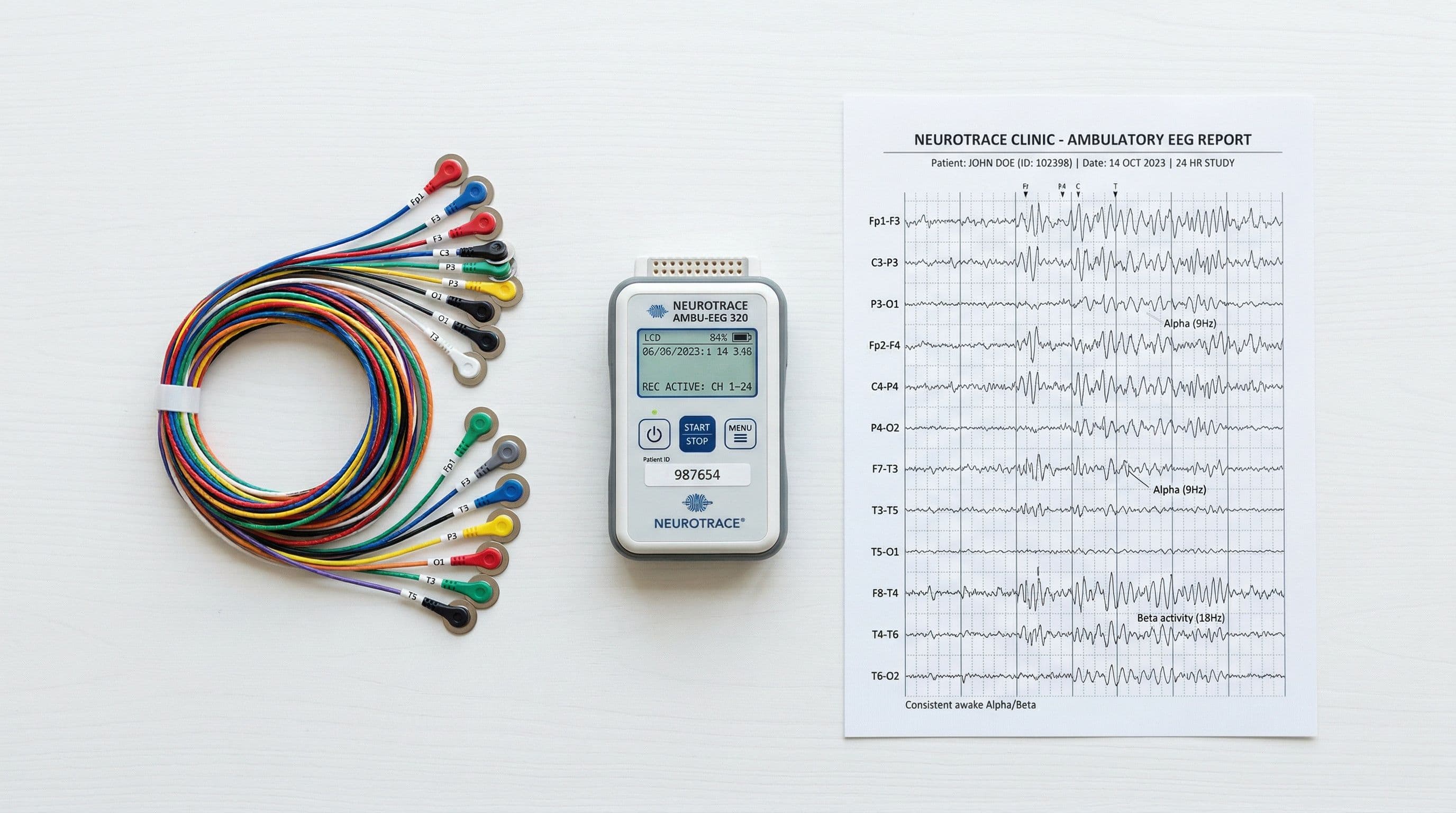
If your GP or neurologist has recommended an EEG (electroencephalogram), you may be wondering what the test involves and which type is right for you. At CURA Medical Specialists, we offer three types of EEG testing, each designed for different clinical situations.
This guide explains the differences between routine EEG, ambulatory EEG, and sleep-deprived EEG to help you understand what to expect.
What Is an EEG?
An EEG is a non-invasive test that records the electrical activity of your brain using small electrodes placed on your scalp. It is one of the most important diagnostic tools in neurology, helping doctors identify abnormal brain wave patterns associated with conditions like epilepsy, seizures, and other neurological disorders.
1. Routine EEG
A routine EEG is the standard, first-line test. It is performed in our Drummoyne clinic and takes approximately 20 to 40 minutes. Full details, including fees and what to bring, are on our routine EEG page.
Best for:
- Initial investigation of suspected seizures or epilepsy
- Evaluating unexplained episodes of loss of consciousness
- Monitoring the effectiveness of anti-epileptic medication
- General screening of brain electrical activity
What to expect:
You will sit or lie comfortably while electrodes record your brain activity. The technician may ask you to breathe deeply or look at a flashing light to activate certain brain wave patterns. The test is painless and you can return to your normal activities immediately afterwards.
2. Ambulatory EEG (3-Day Monitoring)
An ambulatory EEG is a portable, extended recording that monitors your brain activity continuously for up to 72 hours while you go about your daily life. See our ambulatory EEG page for how the equipment is fitted and returned.
Best for:
- Capturing events that happen infrequently and may be missed by a routine EEG
- Distinguishing between epileptic seizures and non-epileptic events
- Recording brain activity during sleep and waking over multiple days
- Patients whose routine EEG was normal but symptoms persist
What to expect:
Electrodes are attached to your scalp and connected to a small, lightweight recorder that you wear for three days. You can continue most daily activities, including sleeping, while the device records continuously. You will be asked to keep a diary of any symptoms or events during the monitoring period.
3. Sleep-Deprived EEG
A sleep-deprived EEG is performed after you have stayed awake for approximately 24 hours. Sleep deprivation increases the likelihood of detecting abnormal brain activity. Our sleep-deprived EEG page sets out how to prepare for the night before.
Best for:
- Cases where a routine EEG was normal or inconclusive but suspicion of epilepsy remains high
- Detecting abnormalities that only appear when the brain transitions between wakefulness and sleep
- Evaluating patients with specific types of epilepsy that are more active during drowsiness
What to expect:
You will need to stay awake the night before the test. The EEG is then performed in the morning while you are naturally drowsy and may fall asleep during the recording. The test itself takes approximately one hour. You should arrange for someone to drive you home afterwards, as you will be sleep-deprived.
Which EEG Is Right for Me?
Your neurologist will recommend the most appropriate type of EEG based on your symptoms, medical history, and previous test results. In many cases, the diagnostic pathway follows a logical progression:
- Routine EEG — the starting point for most patients
- If the routine EEG is normal but symptoms persist, your neurologist may recommend a sleep-deprived EEG or ambulatory EEG
- Ambulatory EEG provides the most comprehensive data, capturing brain activity over three full days
Each type of EEG provides different but complementary information. Your neurologist will explain which test is most appropriate for your individual situation and what the results mean for your care.
Book Your EEG at CURA Medical Specialists
Our team of specialist neurologists in Drummoyne, Sydney offers all three types of EEG testing. Whether you need a routine EEG as a first step or an ambulatory EEG for extended monitoring, we provide expert care from diagnosis through to treatment.
Book your appointment online through HealthEngine or contact our clinic to discuss your referral.